
A Reflection By Rabbi Gersh Lazarow
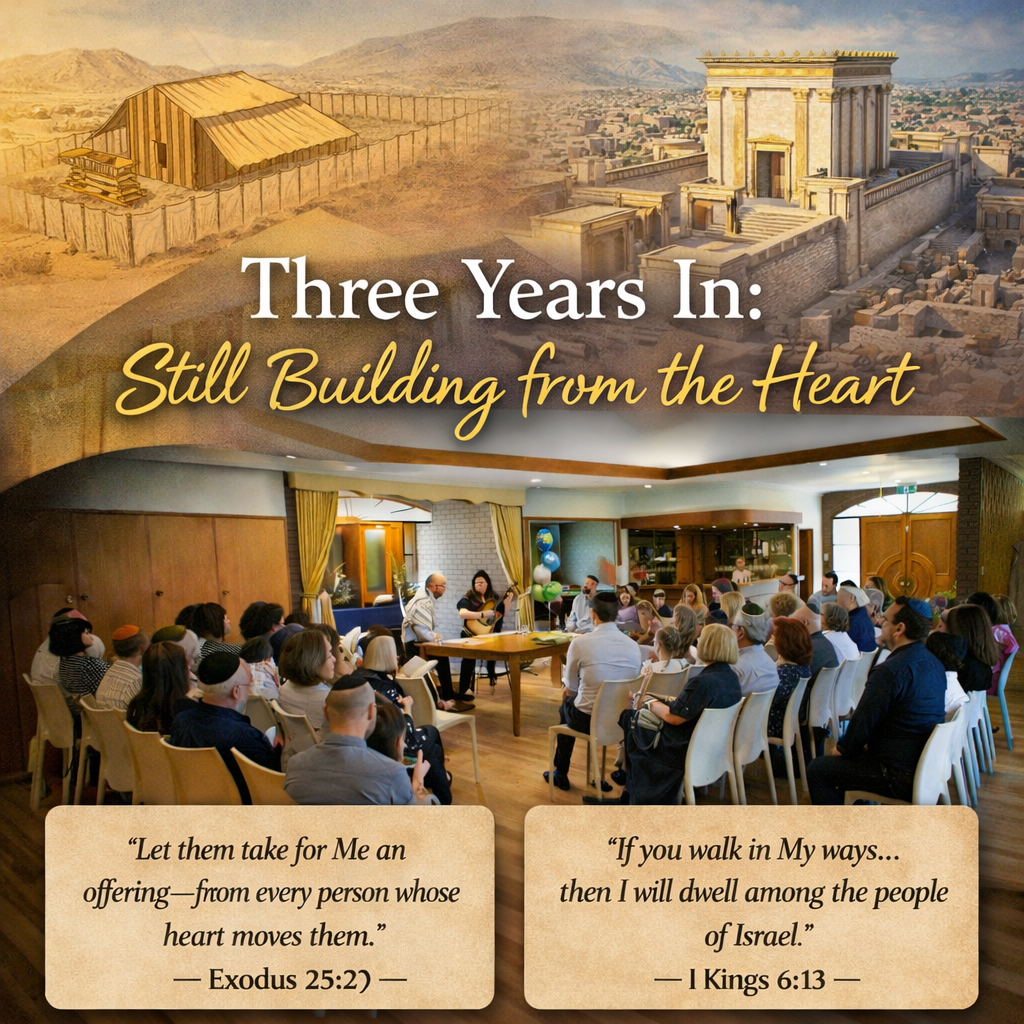
I haven’t written here for a little while. Not because there hasn’t been anything to say, but because most of the past months have been spent in the steady, quiet work of building. Conversations, planning, pastoral moments, learning, setting tables, taking them down again. The kind of work that shapes a community over time but does not always lend itself to immediate reflection.
As we prepare for the second of our monthly Shabbat morning services for the year, I have found myself drawn back into that reflective space, prompted by this week’s Torah portion, Terumah, and its accompanying haftarah. Both texts feel as though they speak directly to where we find ourselves three years into the Shtiebel journey.
Three years is still early in the life of a community, yet it is long enough for something to have taken root. Long enough for trust to grow and for people to begin to feel that this is a place they can rely on. Shtiebel began with a simple hope that we might create a Jewish space that feels personal, relational, thoughtful, and creative.
It was never primarily about a building, and in many ways it still is not. What we have been building together is a culture. A way of gathering. A sense that Jewish learning and prayer and life-cycle moments can unfold in ways that feel attentive and human. The spaces we inhabit matter, but they are vessels. The community itself is the centre.
That is part of why Terumah has felt so resonant this week. The portion opens not with measurements or design plans but with an invitation. The people are asked to bring offerings for the building of the Mishkan, each person moved by their own heart. The sanctuary emerges not from decree but from generosity. It is shaped by what people choose to bring, and by the willingness of a community to take shared responsibility for something that will hold them.
“Let them take for Me an offering — from every person whose heart moves them.”
(Exodus 25:2)
Reading those words this week, I found myself thinking about how much of Shtiebel has come into being in precisely that way. Over these past three years people have brought what they can. Time. Energy. Financial support. Skills. Creativity. Presence. Encouragement. Questions. Patience. No single person or plan could have built what now exists. It has emerged from the collective willingness of many to help shape something that did not yet have a fully defined form.
The haftarah that accompanies Terumah moves the story forward into a different moment in our history. Solomon is preparing to build the Temple in Jerusalem. The portable sanctuary of the wilderness has given way to something permanent and established. It would be easy to assume that the building itself marks the culmination of the story. Yet right in the middle of the construction narrative comes a quiet reminder that the structure alone is not what ensures God’s presence.
“As for this house that you are building, if you walk in My ways… then I will dwell among the people of Israel.”
(I Kings 6:12–13)
It is a gentle but unmistakable teaching. A building can be completed. A community is always in the process of becoming. Presence is sustained not by architecture alone but by the way people live with one another inside what they build.
Three years into Shtiebel’s life, that feels like the work in front of us. We are no longer at the very beginning, but we are still very much in the building phase. Rhythms are forming. Learning has deepened. Lifecycle work has grown. More people are connected to this space than in those early months. With that growth comes a responsibility to ensure that what we are building remains aligned with the values and intentions that shaped its beginnings.
Over the past year, one of the ways we have tried to hold that alignment has been through the formation of a small informal advisory circle. These are people who care deeply about Shtiebel and who have been willing to sit with Tammy and me as thoughtful conversation partners. They offer perspective, memory, and honest reflection as we navigate the growth of something still quite young. They are not there to formalise or institutionalise what we do, but to help ensure that what is emerging can endure with integrity. Their presence has been a quiet but important reminder that building something meaningful is always a shared process, and that communities benefit from wise voices around them as they mature.
As we approach this second Shabbat morning gathering of the year, I feel a strong sense that these monthly services are part of that ongoing construction. They are not grand gestures. They are simply another rhythm in which we can gather with intention. A Shabbat morning offers time to pray without rush, to learn with curiosity, and to sit in conversation. It offers the possibility of depth. It allows us to continue shaping a communal life that is steady and relational rather than occasional.
The Torah’s description of the Mishkan reminds us that sanctuaries are built through the offerings of a community. The haftarah reminds us that what is built can only hold meaning if the life within it remains aligned with its purpose. That feels like an important pairing for us at this moment. Three years in, we have something real. Something people care about. Something that is beginning to feel steady. The task now is to continue building in a way that protects the relational core that has always defined Shtiebel.
There is much to be grateful for as we enter this next stage. There is also much still to shape. That is part of the privilege of being a young community. We are still able to be intentional about who we are becoming. As we gather this Shabbat morning, I hope we can hold both of those truths together. Gratitude for what has already taken root, and a shared commitment to continue building something that can hold us, support us, and, in time, welcome many others into its space.
Image: Three years in. Created with a little help from ChatGPT and a lot of help from our community.
About the Author

Rabbi Gersh Lazarow is the founding rabbi of Shtiebel, an independent Jewish community in Melbourne dedicated to openness, belonging, and the belief that every person should be empowered to “do Jewish their way.” His work brings together tradition, contemporary thought, and a deep commitment to helping individuals and families celebrate, learn, and live Jewishly with integrity and joy. With more than two decades of communal leadership, teaching, and pastoral work, Rabbi Lazarow is recognised for his thoughtful voice, accessible teaching, and his passion for creating spaces where people can shape meaningful Jewish lives on their own terms. As with much of his writing at Shtiebel, he shaped this piece with the help of AI as an editorial companion — a tool that helps clarify language but not intention. The spirit, teaching, and reflection remain wholly his own.