A Yom HaShoah Reflection By Rabbi Gersh Lazarow
Tonight, as Yom HaShoah begins, I find myself holding memory in a different way.
Not only as something we inherit, but as something that is now, unmistakably, ours to carry.
I was not raised in the shadow of the Holocaust in the way that many were. My own family story, South African and Lithuanian, was spared the immediate devastation that consumed so much of European Jewry. And yet, through the family I have built, through Mich and her family, through the stories that have become the stories of our children, the Shoah has become deeply, inextricably woven into my own Jewish identity.
Mich, her parents, and our kids walked the grounds of Auschwitz as part of the March of the Living. They stood where our people stood. They saw what was left behind. They carried those experiences home, ensuring that memory does not remain abstract, but lives in the body, in the imagination, in the soul.
At the centre of that memory for our family is Mich’s grandmother, the late Susan Nozik z”l. Susie was not only a survivor of extraordinary strength but an educator in the truest sense of the word. She understood that survival alone was not enough. The story had to be told.
For years, she volunteered as a guide and educator at the Melbourne Holocaust Museum, walking visitors through the history she herself had lived. Again and again, she chose to stand before others and give voice to what so many could not. Her testimony, recorded for the USC Shoah Foundation, continues to do that work. I return to it often in my own teaching, with students of all ages, those beginning their Jewish journeys and those deepening them, and in telling her story I have come to understand that memory is not static. It lives in the telling, and in the listening.
But in recent weeks, that sense of responsibility has sharpened.
Our family marked the passing of Johnny Markus, Susie’s cousin, the last survivor of his generation. With his death, something shifted. Not only grief, though there was that in abundance, but a quiet, sobering realisation that the generation of witnesses is coming to an end.
And with that, the obligation to remember and to tell no longer feels abstract. It feels personal. Immediate. Urgent.
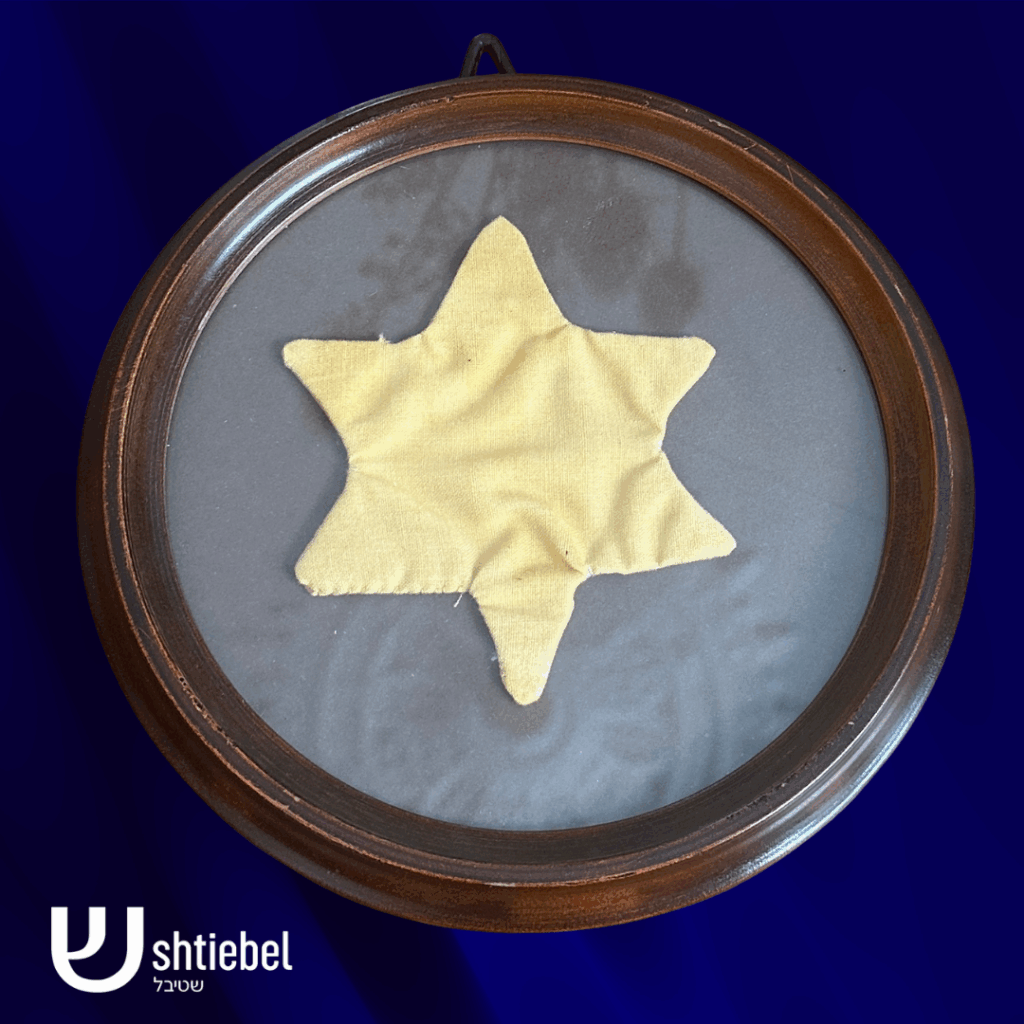
At our Seder table this year, we spoke his name. We spoke of that generation. And I found myself drawn, again and again, to the framed yellow star that sits on our mantel.
It is an uncomfortable object. Not an heirloom one would choose. Not a symbol of pride. It was a badge imposed, a mark of degradation, forced upon Jews by the Nazis and the Hungarian Arrow Cross. It signified exclusion, vulnerability, impending destruction.
And yet, Susie chose to keep it.
She placed it in a drawer in her home. Not displayed, not entirely hidden, held perhaps in that delicate space between memory and survival. After her passing, we took it from that drawer and placed it on our mantel.
Not because it is easy to look at, but because it is necessary.
Because without her, and without her generation, we are the ones who must now decide how memory is held, and how it is shown.
That star asks something of us. It asks that we do not look away, that we resist the comfort of distance, that we remember what it meant to be marked, to be ostracised, to be stripped of dignity, to be hunted, tortured, and murdered.
But it also asks something else.
That in a time when antisemitism once again finds voice and confidence, we consider what it means to be visibly, unapologetically Jewish. Today, many of us choose to wear our stars around our necks, in the form of a Magen David, a chai, or a hamsa. It is not the same, it will never be the same, and we must be careful not to collapse that distance. But there is something profoundly powerful in the act of choosing visibility where once there was no choice at all.
On this Yom HaShoah, I am thinking about that shift.
From stars that were forced upon us, to stars we choose to wear.
From stories that were lived, to stories that must now be told.
From memory as inheritance, to memory as responsibility.
May we be worthy of that responsibility. May we tell these stories with honesty and care. And may the memories of those who came before us continue to shape the kind of Jewish lives we choose to live.
יהי זכרם לברכה
May their memories be for a blessing.
We will be marking Yom HaShoah as part of our Kabbalat Shabbat at Shtiebel this Friday, beginning at 6:00pm, as a community committed not only to remembering, but to carrying these stories forward together.
Image: The Yellow Star on our mantel at home
About the Author
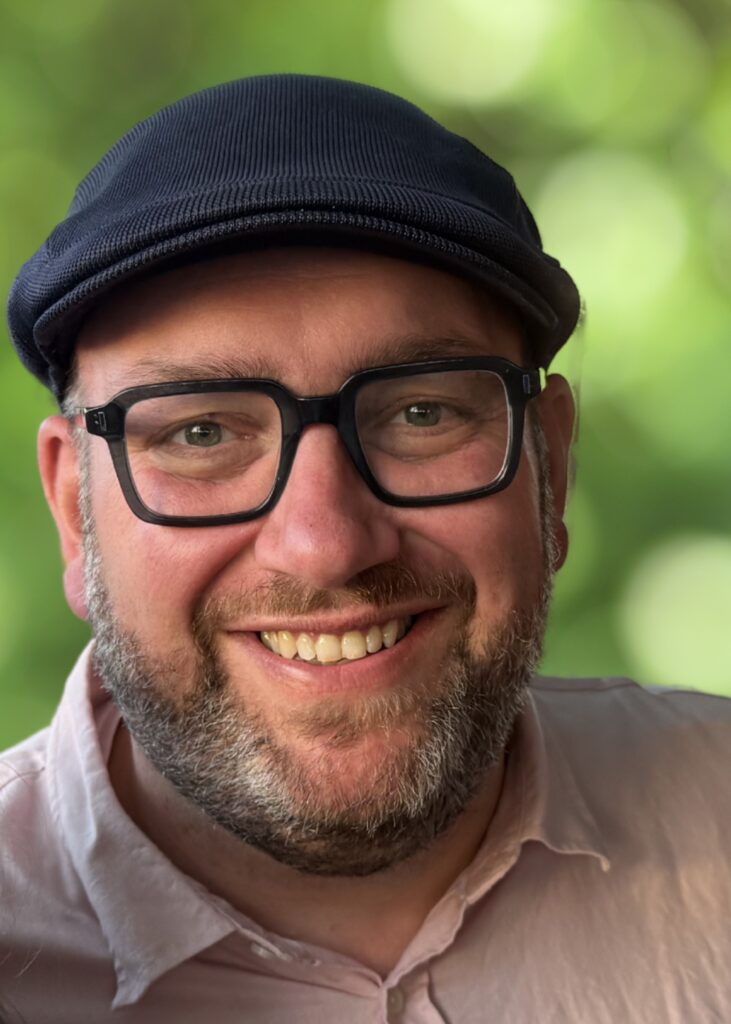
Rabbi Gersh Lazarow is the founding rabbi of Shtiebel, an independent Jewish community in Melbourne dedicated to openness, belonging, and the belief that every person should be empowered to “do Jewish their way.” His work brings together tradition, contemporary thought, and a deep commitment to helping individuals and families celebrate, learn, and live Jewishly with integrity and joy. With more than two decades of communal leadership, teaching, and pastoral work, Rabbi Lazarow is recognised for his thoughtful voice, accessible teaching, and his passion for creating spaces where people can shape meaningful Jewish lives on their own terms. As with much of his writing at Shtiebel, he shaped this piece with the help of AI as an editorial companion — a tool that helps clarify language but not intention. The spirit, teaching, and reflection remain wholly his own.