
A Reflection By Rabbi Gersh Lazarow
This evening, as Tisha B’Av begins, Jews around the world will once again gather to remember the destruction of Jerusalem. We will sit on low stools, read the Book of Lamentations and recite words of grief that have echoed through Jewish history for nearly two thousand years.
At the heart of the day sits an uncomfortable teaching of the rabbis. While the Romans destroyed the Second Temple, they say, it was sinat chinam, baseless hatred, that destroyed us. Whether that is history or theology has always seemed less important to me than the question it asks of every generation. What happens to a people when they lose the ability to remain in relationship with one another? What is it that turns disagreement into division, and division into destruction?
Those questions have been echoing in my mind ever since my final night in Israel last week.
I had spent the previous three weeks immersed in conversations about the future of the Jewish people. My mornings were spent studying at the Shalom Hartman Institute alongside rabbis from across North America. The rest of my time was spent travelling through a country still carrying the wounds of October 7, visiting places where grief has become part of the landscape, and spending precious time with my daughter Liv as she continues her own Israeli journey.
By the time my last evening arrived, I thought I understood what this trip had been teaching me.
Then I found myself in a room that quietly challenged that assumption.
Having spent many years active in Reform Zionist leadership here in Australia, I was fortunate to be invited to participate in a dialogue between American non-Orthodox rabbis and Israeli Religious Zionist leaders at ANU Museum of the Jewish People. The evening has already been thoughtfully described by Josh Weinberg, President of ARZA, by former Knesset member and Hartman scholar Tehila Friedman, one of the leading voices in Israel’s liberal Religious Zionist community, and by Judah Ari Gross in eJewishPhilanthropy. Rather than recount the evening itself, I find myself returning to what it revealed.
As the conversation unfolded, I found myself listening to stories that rarely occupy the same space. American rabbis spoke about isolated Jewish students, fractured friendships, interfaith relationships placed under enormous strain, and communities trying to hold together an enduring love for Israel with profound moral questions about the war. Israeli participants spoke of children in uniform, reserve duty, families living with absence, and the relentless weight of a conflict that has become part of everyday life.
What struck me wasn’t that one story was more compelling than another. It was that each had, almost inevitably, become harder for the other to hear.
One participant quietly asked whether Israelis really understood what Jewish communities in the Diaspora had been experiencing over the past twenty-one months.
Later, Tehila Friedman reflected publicly that, until recently, she herself had simply had no emotional capacity to hear those stories. Israel’s own trauma had consumed all of her attention. Only now, she wrote, was she beginning to lift her head and listen.
Her honesty stayed with me.
Not because I found it surprising, but because I recognised something deeper within it.
Perhaps this is one of trauma’s cruellest consequences. It doesn’t necessarily make us less compassionate. It simply narrows our field of vision. Our own experience becomes so immediate, so consuming, that it leaves little room for anyone else’s.
I suspect many of us in the Diaspora have experienced the mirror image. We have tried to understand what Israelis have been carrying, but distance inevitably limits understanding. We read the headlines, visit when we can, send our children, raise money, advocate, worry and pray. Yet there are parts of life that can only be understood by those living them.
If we cannot fully hear one another, perhaps it is not because we care too little.
Perhaps it is because we are all carrying too much.
That thought has lingered with me throughout the days leading up to Tisha B’Av.
We often translate sinat chinam as baseless hatred, but perhaps it begins somewhere much quieter. Perhaps it begins the moment we become so certain of our own story, or so consumed by our own pain, that we lose the curiosity to hear someone else’s.
The evening concluded with Rabbi Sharon Brous reflecting on a passage from Mishnah Middot. Those entering the Temple in mourning walked against the flow of everyone else so that they would be noticed. Others would stop, ask what had happened, and accompany them in their grief.
I had never really considered that image before.
A society in which noticing another person’s pain was woven into the architecture of sacred space.
Then we stood together and sang:
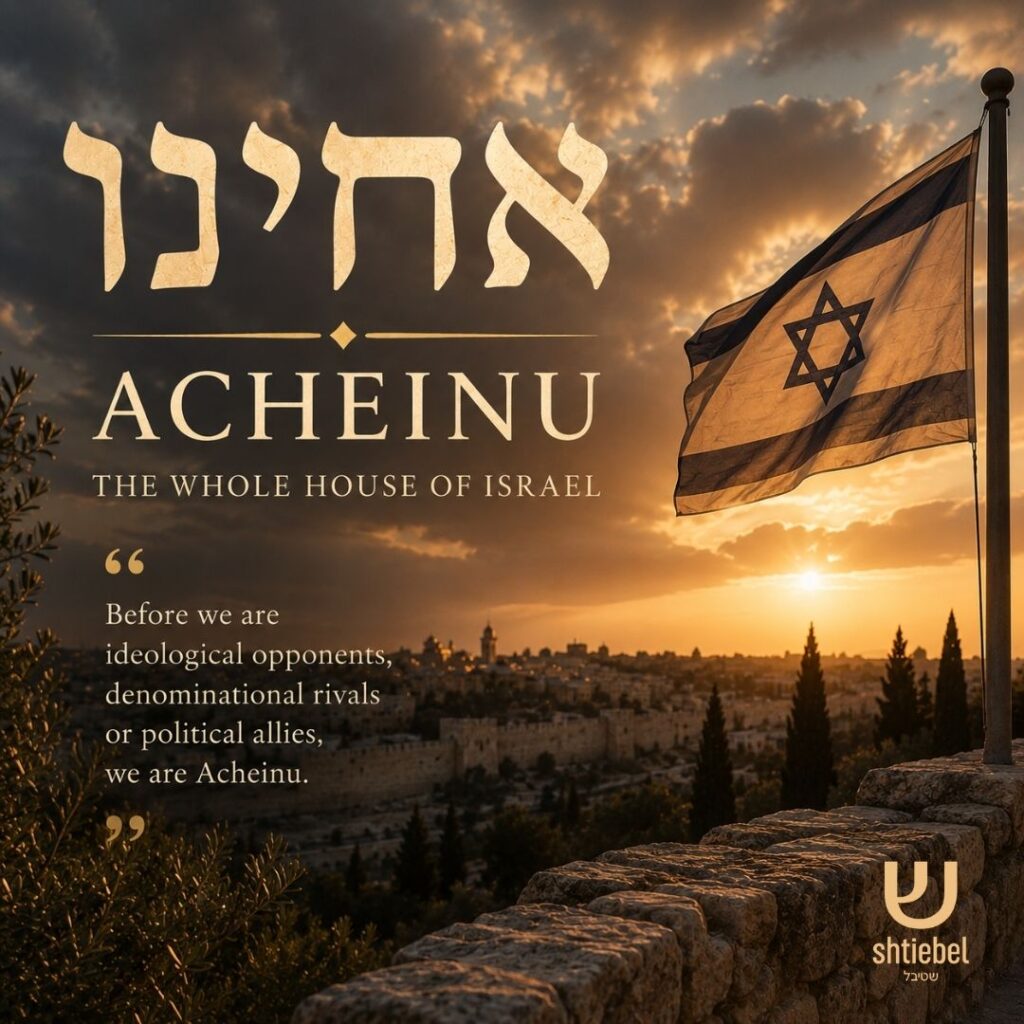
Acheinu kol beit Yisrael.
Our brothers and sisters, the whole House of Israel.
I have sung those words countless times. Like so many Jews over the past twenty-one months, they have become intertwined with prayers for the hostages, for soldiers, for families, and for peace. Yet standing in that room, surrounded by people whose politics, theology and lived experiences were often profoundly different from one another, I heard them differently.
The whole House of Israel.
Not the House of Israel that agrees with me.
Not the House of Israel that prays as I do.
The whole House of Israel.
The rabbis never suggested that Jerusalem was destroyed because Jews argued. Judaism has always made room for argument. The pages of the Talmud are built upon it. Their concern was something else entirely. What happens when disagreement hardens into estrangement. When certainty leaves no room for curiosity. When another Jew ceases to be someone from whom I might still have something to learn.
Perhaps that is why the memory of sinat chinam has endured for two thousand years. It is less an explanation of how Jerusalem fell than a warning about how any community begins to fracture.
As Tisha B’Av begins tonight, I find myself praying for something that feels both remarkably simple and profoundly difficult: the courage to listen before we judge, to make room for stories that unsettle our own, and to remember that before we are ideological opponents, denominational rivals or political allies, we are Acheinu.
We are, still and always, one family.
Image credit:
Achienu is based on an original photograph taken by Rabbi Gersh Lazarow in Jerusalem. The accompanying title treatment and graphic design were created with the assistance of OpenAI’s ChatGPT, preserving the original photograph while enhancing it for publication.
About the Author
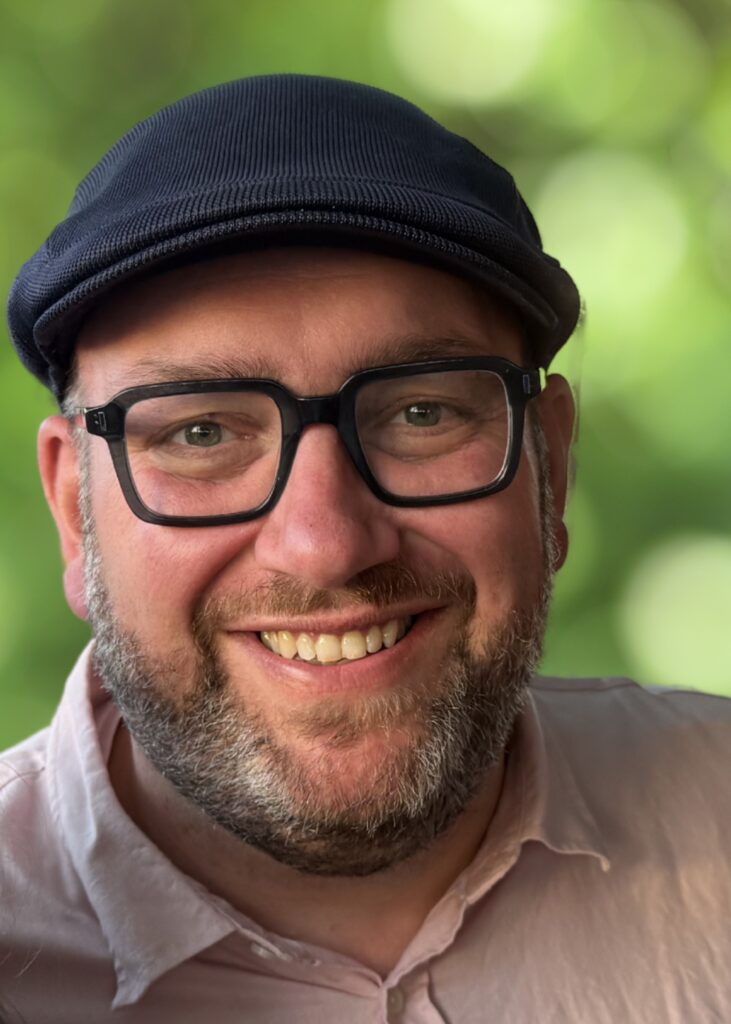
Rabbi Gersh Lazarow is the founding rabbi of Shtiebel, an independent Jewish community in Melbourne dedicated to openness, belonging, and the belief that every person should be empowered to “do Jewish their way.” His work brings together tradition, contemporary thought, and a deep commitment to helping individuals and families celebrate, learn, and live Jewishly with integrity and joy. With more than two decades of communal leadership, teaching, and pastoral work, Rabbi Lazarow is recognised for his thoughtful voice, accessible teaching, and his passion for creating spaces where people can shape meaningful Jewish lives on their own terms. As with much of his writing at Shtiebel, he shaped this piece with the help of AI as an editorial companion — a tool that helps clarify language but not intention. The spirit, teaching, and reflection remain wholly his own.