
A Reflection By Rabbi Gersh Lazarow
Three years ago, I wrote: “Never have we felt so far away. Our hearts are tethered to Israel, but our hands feel powerless from across the world.”
None of us imagined what would follow: the conflict, the pain, the suffering, the destruction. Nor could we have imagined how profoundly our lives as Jews in Australia would change. Alongside concerns about safety and security, our sense of belonging has been shaken. Relationships and places we once trusted feel different. We have found ourselves explaining grief we hoped others would simply understand.
Today, we remember those murdered on October 7, the anguish of captivity and the lives forever changed. We carry that day and everything that has followed, in our relationships, our conversations and our bodies. The tension. The exhaustion. The difficulty of switching off.
As we mark this anniversary, I keep returning to a question: what do we want our remembrance to lead us towards?
For me, the answer is clear. We remember so that we can recommit, not to war and conflict, but to living our highest values. We honour those whose lives were taken by allowing their memory to deepen our commitment to life, to compassion, to justice and to peace.
That begins with making room for what we are carrying.
At Shtiebel, we paused for a dedicated Yizkor memorial during our Simchat Torah service on Chag HaAtzeret. This evening, we will gather for Soul Sound, a breath & sound healing experience, to acknowledge the trauma we continue to carry and give ourselves space simply to breathe. On Friday night, we will return to some of our memorial readings and songs during Kabbalat Shabbat.
These gatherings belong together. We need room to mourn, to breathe and to be held by music and community. We need one another as we find the strength to consider how we want to live.
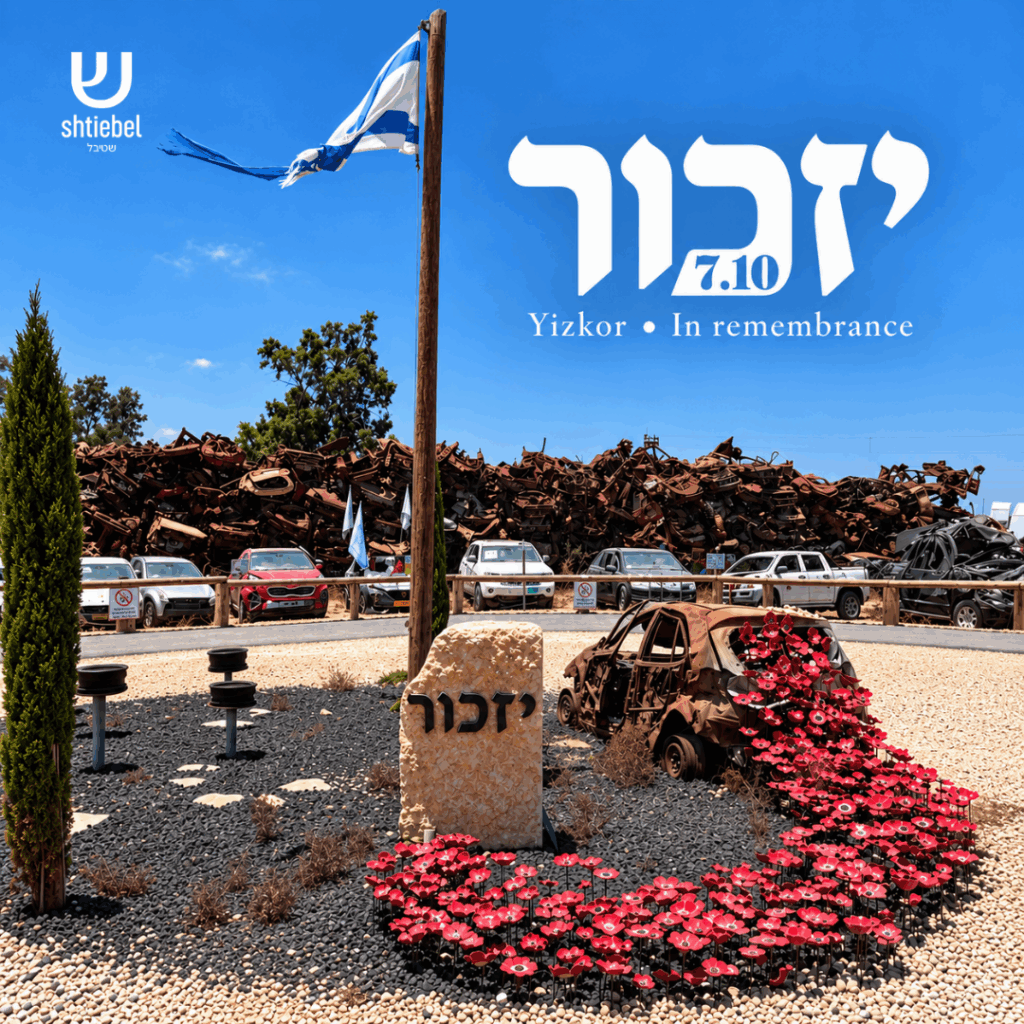
A few months ago, during my visit to Israel, I took the photograph accompanying this reflection. I was standing at the car graveyard, surrounded by vehicles burnt out and destroyed on October 7. Among the wreckage were delicate poppies, handcrafted by residents of the Otef, the communities of the Gaza envelope. Above them hung a tattered Israeli flag.
The flag spoke to me as much as the vehicles and the poppies. Frayed and still flying, it held something of the vulnerability and determination I was feeling. And there, amid so much destruction, people whose own communities had suffered had made something with tenderness and care.
I have kept returning to that choice. To the people who sat down and shaped those flowers. To the care they were still able to offer.
Beside them, a stone bore the word Yizkor. Remember.
In Far Away, my first response to October 7, I wrote that even when we feel powerless, we are not without purpose. Three years on, my Prayer for the Guardians of Israel returns to that conviction and asks what our purpose requires of us.
It prays for those who defend, heal, shelter and sustain, and for the families who wait for them. It asks for courage, compassion and restraint. At its heart are words I need to hear myself:
“Remind them, and remind us, that every human being is created in the Divine image. Even now. Especially now.”
Our love for Israel and our commitment to the safety of our people must remain bound to those values. We need them to guide our choices when we are frightened, angry and hurting. We need them as we protect what we love and recognise the humanity of others.
Here in Australia, we have work to do: caring for those whose sense of belonging has been shaken, nurturing Jewish life with warmth and confidence, and sustaining relationships in which we can speak honestly and listen with compassion.
We will carry the memory of October 7 into that work. May it strengthen our resolve to protect life and our willingness to build a future in which more people can live safely, freely and in peace.
יזכור. We remember, and we recommit.
Image credit: An original photo taken by Gersh Lazarow, during a visit to Israel a few months ago. The car graveyard holds vehicles destroyed on October 7, alongside vehicles brought out of Gaza by the attackers. The handcrafted poppies, made by residents of the Otef, also fill the Nova festival memorial site.
About the Author
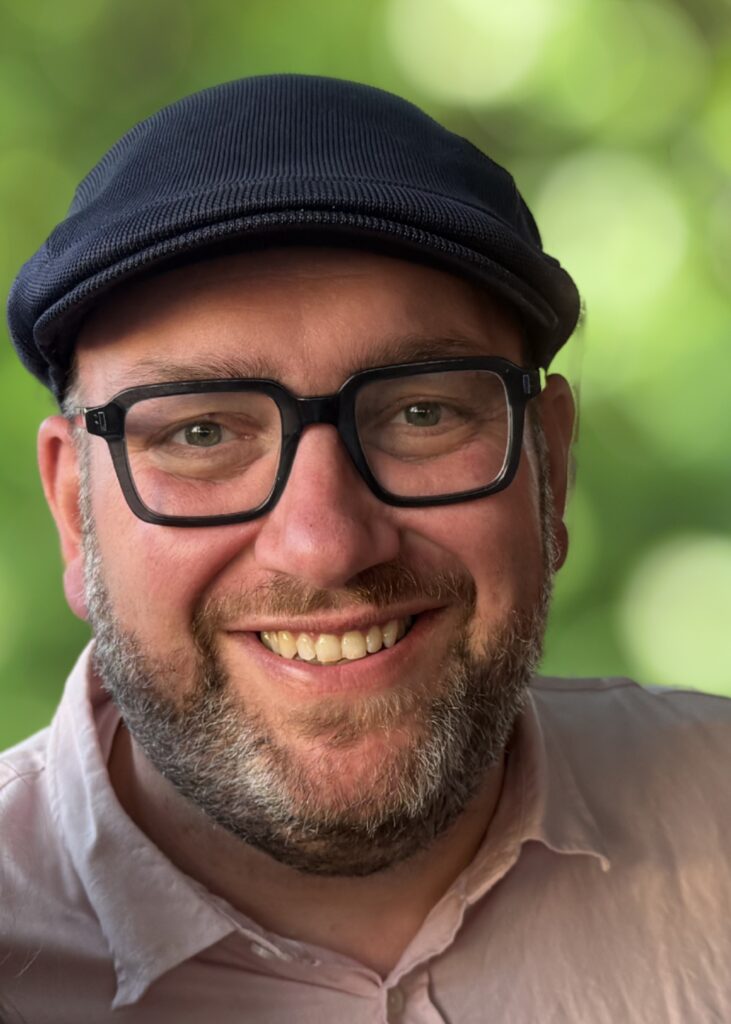
Rabbi Gersh Lazarow is the founding rabbi of Shtiebel, an independent Jewish community in Melbourne dedicated to openness, belonging, and the belief that every person should be empowered to “do Jewish their way.” His work brings together tradition, contemporary thought, and a deep commitment to helping individuals and families celebrate, learn, and live Jewishly with integrity and joy. With more than two decades of communal leadership, teaching, and pastoral work, Rabbi Lazarow is recognised for his thoughtful voice, accessible teaching, and his passion for creating spaces where people can shape meaningful Jewish lives on their own terms. As with much of his writing at Shtiebel, he shaped this piece with the help of AI as an editorial companion — a tool that helps clarify language but not intention. The spirit, teaching, and reflection remain wholly his own.