A Reflection By Rabbi Gersh Lazarow
December always draws me into a particular frame of mind. Part of that is simply how life in Australia shifts at this time of year. The weather warms. The days lengthen. Evening light lingers in a way that slows everything down just a touch. Schools begin to wind back. Workplaces soften at the edges. And even without meaning to, we find ourselves looking back at the months we have travelled through and imagining the shape of the months ahead.
Jewish tradition teaches us to do this work before Rosh Hashanah. But the rhythm of an Australian summer has its own quiet pull. A natural pause. A moment that invites reflection almost without our choosing it. The year thins, sunlight stretches, and our inner world turns gently toward meaning-making.
This year, that gentle pause has led me back to the story of Chanukah. Or, more precisely, to the story beneath the story. The layered one. The older one. The version that reveals how the holiday first took shape and how each generation has reimagined it. And the way the ancient tensions within it feel very much alive in our world now, especially when we think about Israel.
Chanukah does not appear in the Tanakh. Its earliest sources are found in 1 and 2 Maccabees, preserved not in our Bible but in the Christian Old Testament. They describe a Jewish community facing real pressure. Cultural. Religious. Existential. A community determined to practise Judaism authentically. Not as prescribed by foreign powers. But shaped by their own covenant, conscience, and communal life. The Maccabees rise as people of conviction, determined to protect the integrity of Jewish practice and belief.
When they purify the Temple, they celebrate for eight days. Almost certainly a delayed Sukkot. The great pilgrimage festival they had missed while fighting for Jerusalem. Palm branches. Hallel Psalms. A community breathing again.
It is not difficult to understand why this version of Chanukah carried such power for generations who longed for autonomy. And it is not difficult to see its resonance in the State of Israel, where questions of identity and safety are lived realities and not abstract ideas.
Centuries later everything looks different. The Temple is gone. Sovereignty is gone. Jewish life is scattered and reshaped. And the rabbis of the Talmud inherit a festival rooted in military victory that no longer fits the world they occupy. A holiday centred solely on Jewish nationalism and military success felt both theologically incomplete and practically dangerous in a world where Jews had no sovereignty and no armies. Jewish power could never be the whole story.
So they add a new layer. Quiet. Unexpected. A small cruse of oil. Enough for one day. Burning for eight.
This story does not overwrite the first. It reframes it. It turns our attention toward spirit rather than strength. Toward endurance rather than triumph. Toward the inner life of a people learning to live without power yet refusing to surrender hope.
The rabbis seem to be offering a gentle reminder. Courage matters. Conscience matters. Strength is real. So is restraint. Jewish identity is carried not only by the battles we win but by the values that shape us while we fight them.
Two stories.
Two truths.
Both necessary.
One story calls us to protect our people.
The other calls us to protect our values.
Chanukah insists that we hold both.
And I find myself holding these two stories very closely this year. Because as the very real and existential threats facing Israel continue. And as the rise of antisemitism takes hold both there and here abroad. I worry. I worry that we are leaning too heavily on might and militarism alone. That we are placing our trust disproportionately in the tools of power. Even though history has taught us, again and again, that it has never been the weapon that sustained us. It has always been something far more enduring. Something deeper. Something rooted in spirit.
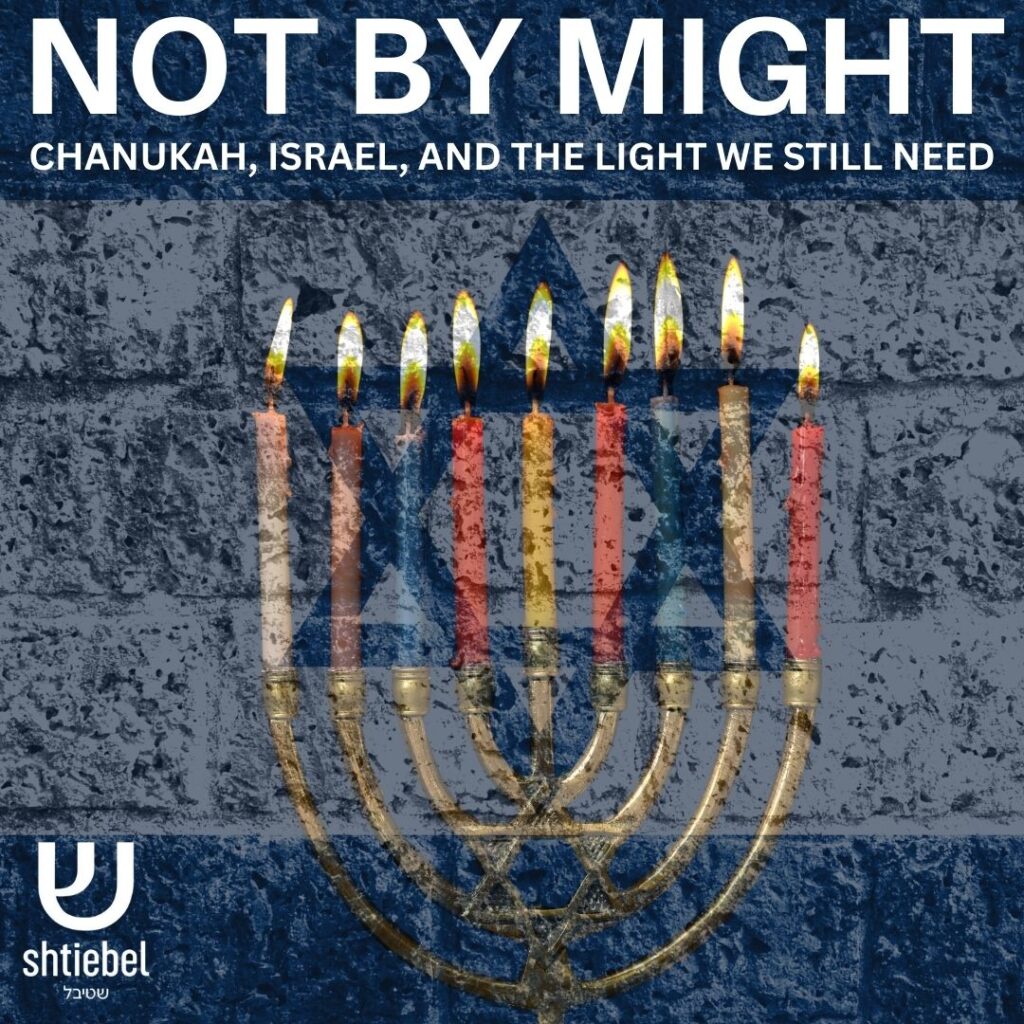
That same tension is woven deeply into the haftarah we read on Shabbat Chanukah. The reading comes from the prophet Zechariah, who describes a golden Menorah flanked by two olive trees. It is a vision of renewal and of light that does not depend on force. The passage ends with a line that has echoed through Jewish life for centuries: Not by might. Not by power. But by My spirit.
It is not a rejection of strength. It is a reframing of it. A reminder that power alone cannot define us. That something larger must guide us. Something rooted in conscience. Vision. Hope.
Pride and pain.
Security and compassion.
Survival and responsibility.
They sit side by side. And we are asked to navigate them with care.
One of the central mitzvot of Chanukah is pirsumei nisa, the instruction to make the miracle visible. We place our chanukkiyot where others can see them. We let their light spill outward into the evening. The rabbis understood something essential. Light kept only for ourselves is not enough. It is meant to travel. To soften darkness for others too.
This is where the two stories return to one another. The historical story gives us courage. The rabbinic story gives us conscience. Together they invite us to think about what it means to hold power responsibly. To care for our people while also caring for our purpose.
A festival built only on military victory would reduce Judaism to brute survival. A festival built only on divine miracles would detach Judaism from the realities we live with. But a festival that recognises the divine light within us and between us can shape a Judaism worthy of its past and essential for its future.
So as we clean our chanukkiyot, as we gather our candles, as we prepare to fill our homes with small, steady light in the warmth of a Melbourne summer, I find myself hoping we can hold both stories at once. That we can honour Jewish strength and elevate Jewish compassion. That we can face the realities of danger while still imagining a future shaped by dignity and care.
May this December invite us back into balance. May our lights shine with integrity and humility. May the mitzvah of pirsumei nisa remind us that our light is meant to be shared. And may we continue striving to be, in the most grounded and generous way, an or lagoyim. A light to the nations. And a gentle reminder to ourselves of who we are called to be.
About the Author
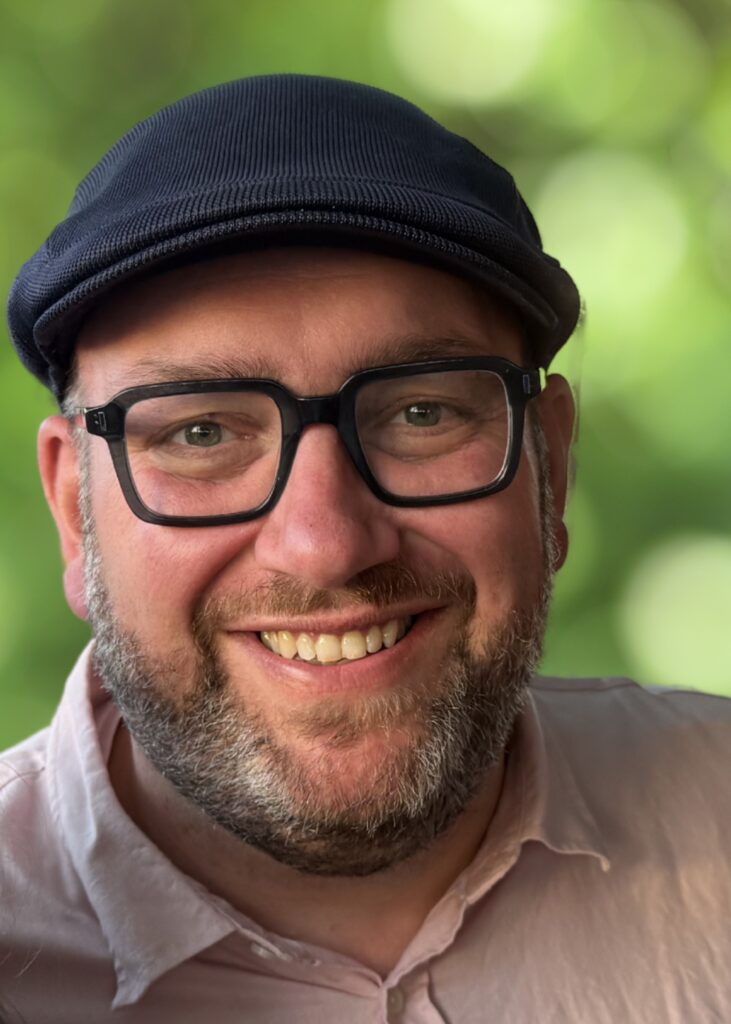
Rabbi Gersh Lazarow is the founding rabbi of Shtiebel, an independent Jewish community in Melbourne dedicated to openness, belonging, and the belief that every person should be empowered to “do Jewish their way.” His work brings together tradition, contemporary thought, and a deep commitment to helping individuals and families celebrate, learn, and live Jewishly with integrity and joy. With more than two decades of communal leadership, teaching, and pastoral work, Rabbi Lazarow is recognised for his thoughtful voice, accessible teaching, and his passion for creating spaces where people can shape meaningful Jewish lives on their own terms. As with much of his writing at Shtiebel, he shaped this piece with the help of AI as an editorial companion — a tool that helps clarify language but not intention. The spirit, teaching, and reflection remain wholly his own.