Kol Nidrie 5787 – By Rabbi Gersh Lazarow
A few weeks ago, someone came to see me and, somewhere in the middle of our conversation, began telling me about a friendship that had fallen apart over the past year.
I know this person well enough to know that this wasn’t some casual friendship. This was twenty years or more. Marriages, children, illness, birthdays, holidays, all the ordinary things that accumulate when somebody has been part of your life for a very long time.
Sometime after October 7th, they had a conversation about Israel that went badly. Something was said that hurt. They tried to talk about it, which somehow made it worse. There were messages afterwards, then fewer messages. The coffees stopped. Eventually there was almost no friendship left.
And so, I did what rabbis do in these situations like this… I asked a question to which I had absolutely no idea what the answer was.
“Do you want to repair the friendship?”
There was a long pause. And then they said:
“Gersh, I don’t know… I think I’m still waiting for them to apologise.”
That sentence has stayed with me.
“I think I’m still waiting for them to apologise”.
Partly because I understood it. Sometimes an apology is exactly what is needed. Sometimes someone has really hurt us, and “let’s just move on” isn’t reconciliation. It’s avoidance dressed up as reconciliation.
But I’ve kept wondering about the other possibility.
What happens if the apology never comes?
There’s a teaching at the very end of Massechet Yoma, the tractate of the Talmud devoted to Yom Kippur, its laws, rituals and confessions. It is a Mishnah I have taught many times, but this year I hear it differently. After everything Massechet Yoma teaches us about how to observe this day, this is where it leaves us with this final thought:
עֲבֵרוֹת שֶׁבֵּין אָדָם לַמָּקוֹם, יוֹם הַכִּפּוּרִים מְכַפֵּר.
עֲבֵרוֹת שֶׁבֵּין אָדָם לַחֲבֵרוֹ, אֵין יוֹם הַכִּפּוּרִים מְכַפֵּר עַד שֶׁיְּרַצֶּה אֶת חֲבֵרוֹ.
For transgressions between a person and HaMakom, Yom Kippur atones. But for transgressions between one person and another, Yom Kippur cannot atone until we’ve made things right with the person we’ve hurt.
Usually I teach this Mishnah from the perspective of the person who caused the hurt, and from that direction its message is wonderfully clear: I cannot pray my way around you. I can fast for twenty-five hours, say every word in the machzor, beat my chest through every Al Chet, but Yom Kippur cannot make the phone call for me. If I hurt you, I have to find you. I have to own what I did. I have to apologise.
But this year I find myself reading the Mishnah from the other side of the hurt.
What if we are the ones waiting for the phone call?
And, of course, we wait for those phone calls for all sorts of reasons. Sometimes it’s a friendship damaged by Israel or politics, and there have been far too many of those this year.
Sometimes it’s the sibling you haven’t properly spoken to since the argument after Mum died.
The adult child waiting for a parent finally to acknowledge something that happened years ago.
The parent waiting for the child to call.
A marriage in which both people are certain they are owed the first apology.
The friend who simply wasn’t there when you needed them.
Some hurts are enormous. Others might sound almost ridiculous if we tried to explain them to somebody else. But somehow we are still carrying them.
And I suspect many of us arrive at Yom Kippur with some version of the same question: what exactly am I supposed to be atoning for? If somebody else said the cruel thing, broke the trust, failed to show up, surely the teshuvah belongs to them.
And the Mishnah agrees. It doesn’t tell the wounded person to get over it. The responsibility for repairing a wrong belongs to the person who caused it.
But that leaves the harder question. What if they don’t? Does my ability to move forward depend upon their ability to do teshuvah?
There is an old Hasidic teaching associated with Reb Simcha Bunim of Peshischa. He taught that each of us should carry two pieces of paper, one in each pocket. On one we should inscribe the words of the Mishnah, Bishvili nivra ha’olam: “For my sake the world was created.” On the other we should write Abraham’s words from Torah, Anochi afar va’efer: “I am dust and ashes.”
The wisdom, Reb Simcha taught, is knowing which pocket to reach into and when.
I’ve always loved that teaching because it understands that all of us carry things around with us. Stories about ourselves. Memories. Words somebody once said. Things that make us larger and things that make us smaller.
Wisdom isn’t pretending that our pockets are empty. It is knowing what we need to carry, and what we might no longer need to carry in quite the same way.
So I wonder what is in our pockets tonight.
The conversation that didn’t end well. The apology that never came. Something said by a parent thirty years ago that can still make us feel twelve. The friendship we still don’t quite understand losing. The argument we’ve replayed so many times in our mind that by now we have finally perfected the response but have no one to say it to.
Some of these things need to be carried. Memory matters. Anger can matter. There are things we should not forget simply because the calendar has turned and a new year has begun.
But there is a difference between remembering something and remaining bound by it.
And that brings me back to one word in our Mishnah that I did not translate earlier: Makom.
The rabbis could have spoken about transgressions bein adam laElohim, between a person and God, but instead they say bein adam laMakom, between a person and HaMakom, “the Place”.
Classically, rabbinic Judaism understood God as the Place, the divine reality within which the world exists. But I suspect many of us as modern Jews also experience God as something much closer, as the divine space within each of us, in conscience, compassion, and that deepest place where we wrestle with who we are and who we want to become.
Perhaps Makom is not only a destination somewhere beyond us. Perhaps it is also a place within. And if so, perhaps this Mishnah asks us another question. Not only, what did I do wrong? But what has happened inside me because of what happened to me?
Where has the hurt settled? What space has the anger begun to occupy? What am I still carrying long after the conversation itself has ended?
I may have every right to be angry, but do I want to live there? I may have good reason to be suspicious, but do I want suspicion to become the place from which I meet everyone? I may still deserve an apology, but how long do I want my ability to move forward to depend upon a phone call I cannot make happen?
Maybe the apology should come. Maybe it never will. But at some point, waiting for somebody else’s teshuvah can become the thing that prevents me from doing my own. Not because what happened was my fault, and not because I suddenly take responsibility for somebody else’s behaviour, but because what happens next is still, at least partly, mine.
And perhaps that is why we begin our Day of Atonement tonight with words of Kol Nidre. …כָּל נִדְרֵי וֶאֱסָרֵי וַחֲרָמֵי וְקוֹנָמֵי…
All the vows, all the obligations, all the things by which we have bound ourselves.
It’s a strange way to begin Yom Kippur. Before Ashamnu, before Al Chet, before we confess anything, we begin with what is essentially a legal formula about vows. There are centuries of argument about precisely what those vows are and what Kol Nidre can actually release.
But I suspect that few come to Kol Nidre for the contract law.
We come for the melody.
The words are legal, but the melody isn’t. It returns to the same words three times, as though something tightly held cannot be loosened all at once.
Perhaps that is what we need from it this year. Because we have become bound to things we never consciously chose: an argument, something somebody said, a relationship that changed, an apology we are still waiting to receive.
Kol Nidre doesn’t tell us that none of it mattered. It doesn’t require us to forgive somebody who hasn’t sought forgiveness. It doesn’t tell us that our anger was wrong. It simply asks us to consider what we are still bound to, and whether we still want to be bound to it?
And so, I keep coming back to that conversation in my office.
“Gersh, I don’t know… I think I’m still waiting for them to apologise.”
I hope they do. I really do.
But I don’t know if they will.
And perhaps Yom Kippur asks us to recognise that their teshuvah belongs to them, and ours belongs to us. Maybe ours begins by looking at what I’ve been carrying in our pockets all year and asking whether we still need to carry all of it in quite the same way.
Maybe there is one argument we no longer need to rehearse. One hurt that can remain real without remaining quite so present. One relationship we can either try to repair or finally allow ourselves to grieve. One thing I have carried far enough.
Not because they were right, or because it didn’t matter, or even because we forgive them.
But because we don’t want to remain bound to it.
So when Kol Nidre begins tonight, I want to invite you to consider reaching into your pockets and ask yourself what you’ve been carrying.
And as the melody returns, once, and then again, and then again, I want to invite you to seriously consider what you are ready to let go of.
What happened, happened.
What hurt, hurt.
What was broken may still need repairing.
But not all of it has to come with us into the New Year!
Image credit:
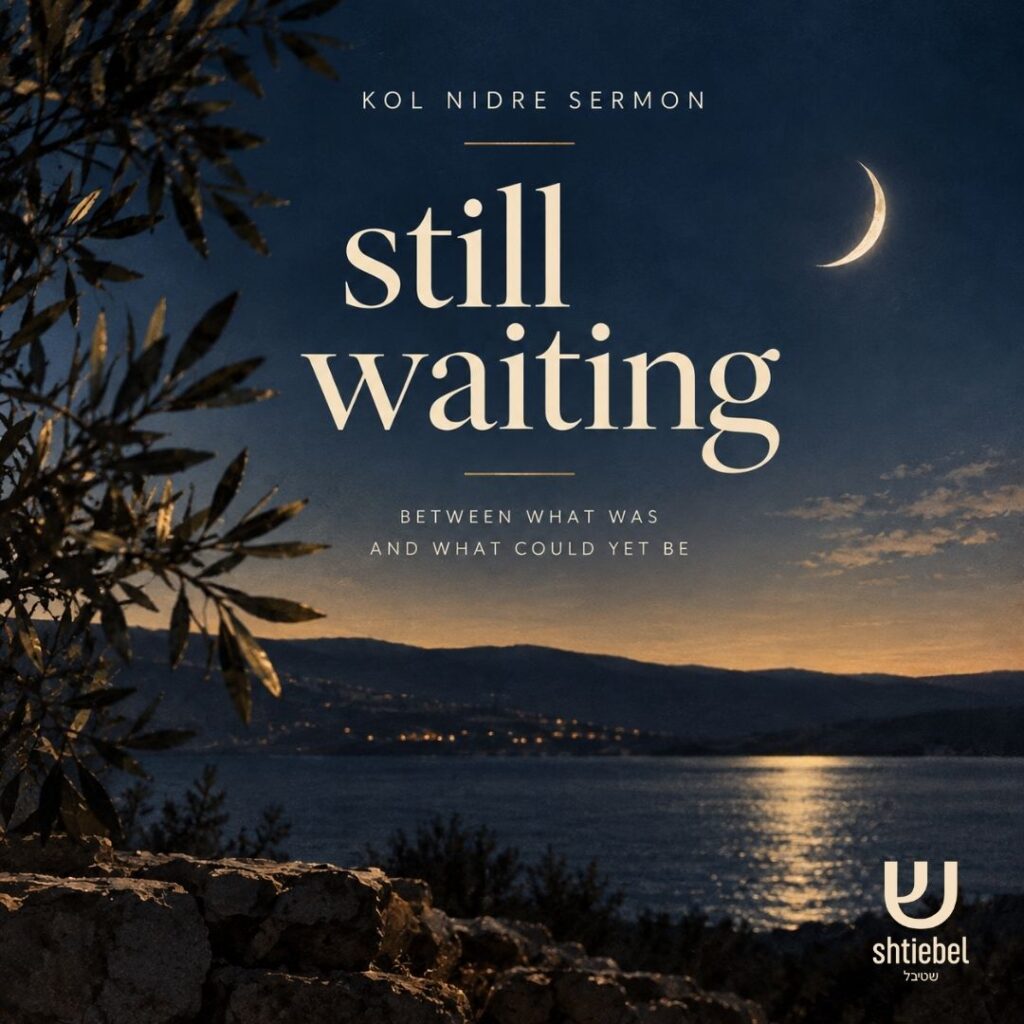
Still Waiting is based on an original photograph taken by Rabbi Gersh Lazarow. The accompanying title treatment and graphic design were created with the assistance of OpenAI’s ChatGPT, preserving the original photograph while enhancing it for publication.
About the Author
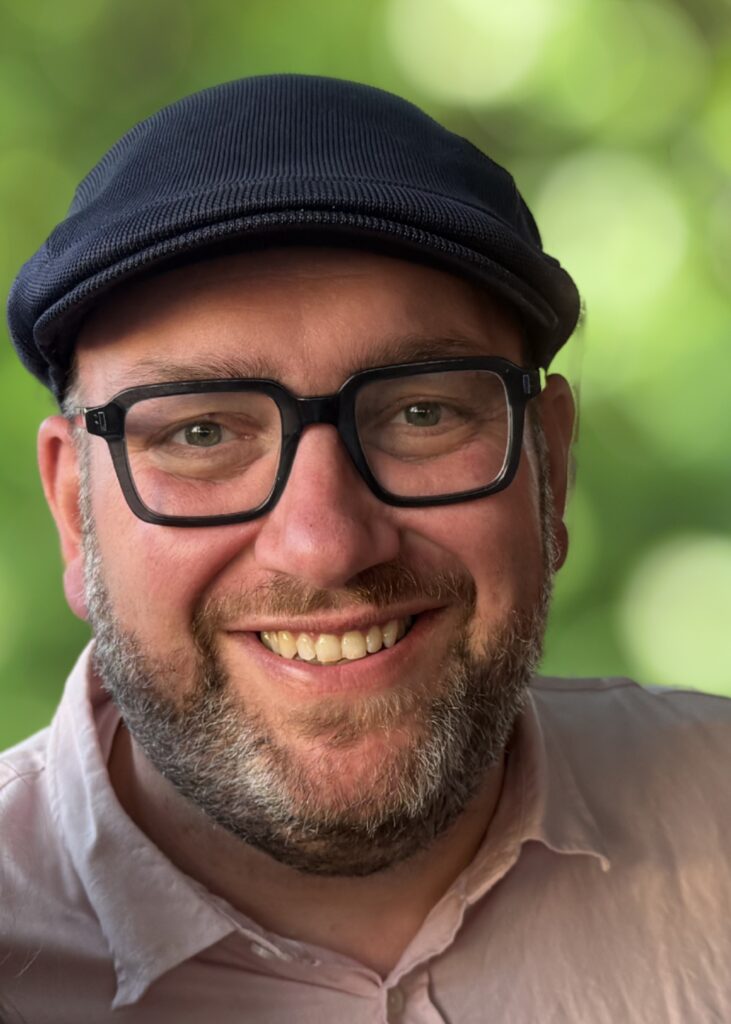
Rabbi Gersh Lazarow is the founding rabbi of Shtiebel, an independent Jewish community in Melbourne dedicated to openness, belonging, and the belief that every person should be empowered to “do Jewish their way.” His work brings together tradition, contemporary thought, and a deep commitment to helping individuals and families celebrate, learn, and live Jewishly with integrity and joy. With more than two decades of communal leadership, teaching, and pastoral work, Rabbi Lazarow is recognised for his thoughtful voice, accessible teaching, and his passion for creating spaces where people can shape meaningful Jewish lives on their own terms. As with much of his writing at Shtiebel, he shaped this piece with the help of AI as an editorial companion — a tool that helps clarify language but not intention. The spirit, teaching, and reflection remain wholly his own.